

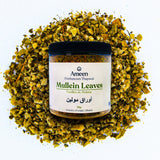
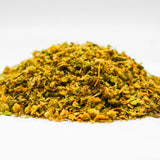
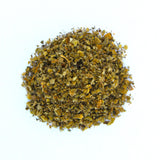
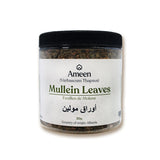
Mullein Leaves
Shipping in Canada: $9.99 to Ontario and Quebec, $14.99 elsewhere. Free over $50.
Mullein, native to Europe and Asia, is a versatile plant celebrated for its long-standing role in traditional herbal practices. Its soft, velvety leaves, pale green in color and oblong or oval-shaped, are known for their mild, earthy flavor and remarkable utility across a variety of applications.
Traditional and Herbal Uses: A Respected Botanical
Mullein leaves hold a prominent place in European herbal traditions, where they are most often steeped into a mild, soft-tasting herbal tea. Strain the tea through a fine cloth or paper filter to catch the fine leaf hairs.
Culinary Applications: Mild and Earthy Flavors
While primarily recognized for their traditional use, young mullein leaves also have culinary uses:
- Raw in Salads: Adds a subtly earthy note when consumed fresh.
- Cooked as a Green: Prepared like spinach or other leafy greens, they bring a unique texture and flavor to dishes.
Though less common in culinary circles, mullein leaves offer an intriguing touch to adventurous recipes.
Modern Applications: Versatile Uses
Mullein leaves continue to find relevance in contemporary herbal practices:
- Herbal Teas and Syrups: Often steeped into teas or crafted into syrups.
- Skin Care Salves: Incorporated into natural balms and creams.
Their versatility highlights their significance in traditional herbal culture.
Botanical and Cultural Identity
- Botanical Name: Verbascum thapsus
- Common Names: Mullein Leaves, Candlewick Plant, Flannel Leaf, Velvet Plant, Felt-Wort, Tinder Plant, Quaker Rouge, Beggar's Blanket, Lady's Foxglove, Aaron's Rod, Donkey's Ears, Hag's Taper, Great Mullein, Bunny's Ears, Jacob's Staff, Our Lady's Flannel
Orders are dispatched within 1 to 2 business days. We ship to Canada and selected international destinations. See our shipping policy for destination minimums. Available shipping options are shown at checkout. Returns follow our refund policy. Shipping policy

What our customers say
More from Herbs & Botanicals

This plan has a 2-shipment minimum
Subscribe & Save takes 15% off every delivery. In return, we ask for a short commitment.
- You are billed and shipped every month at 15% off.
- Your plan runs for a minimum of 2 shipments. Cancellation becomes available once those 2 shipments have been billed.
- You can skip, reschedule or change quantities on any delivery at any time, including the second one.
- Prefer no commitment? One-time purchase is always available at the regular price.